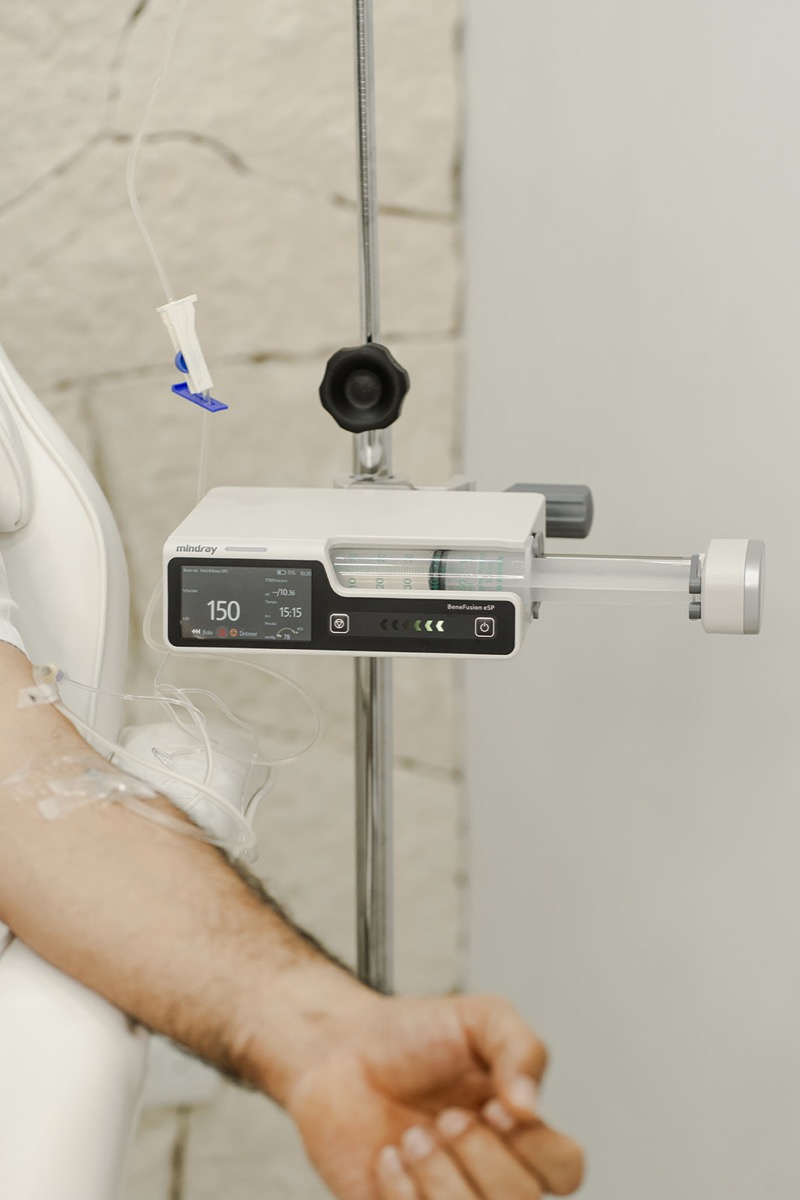



Medical weight management at Regeneris Therapy is a regenerative-internal-medicine program, not a cosmetic service. We treat excess weight as the driver of chronic disease that it actually is — a state of visceral inflammation that accelerates type 2 diabetes, cardiovascular disease, fatty liver, joint degeneration, and accelerated aging. Our protocols integrate GLP-1 medications (semaglutide, tirzepatide) where appropriate, regenerative support (peptides, NAD+ infusions, optional stem cell therapy), supervised nutrition coaching, and structured medical follow-up with labs and EKG. We are honest about realistic outcomes (10–20% body-weight loss in responders over 6–12 months) and equally honest about who is not a good candidate — and we refuse purely cosmetic weight-loss requests. Read on for our medical philosophy, the indications we treat, what a program looks like, the safety monitoring we insist on, and the patients we decline.
Beyond GLP-1: our medical, regenerative approach
Semaglutide and tirzepatide are the most consequential weight-loss medications of the last two decades, and we offer them under prescription with full medical supervision. But the GLP-1 prescription is the start of the program, not the whole program. The reason: pharmacology that suppresses appetite without addressing the underlying metabolic, hormonal, and inflammatory drivers risks lean-mass loss, rebound regain, and a missed opportunity to actually improve metabolic health. Our integrated program pairs GLP-1 therapy (when indicated) with three additional layers. First, regenerative support — selected peptides like AOD-9604 for visceral fat targeting and, in appropriate candidates, stem cell therapy for metabolic and inflammatory modulation. Second, intravenous metabolic support — NAD+ for mitochondrial function, B-complex and electrolyte support during rapid weight loss (see our IV therapy page). Third, supervised nutrition coaching and resistance-training guidance to preserve lean mass during caloric deficit. This is the difference between a prescription and a program.
Why we offer it: visceral inflammation as a chronic disease driver
Visceral adipose tissue — the fat that surrounds and infiltrates internal organs — is not passive storage; it is a metabolically active, inflammation-producing organ. As visceral fat accumulates, it secretes pro-inflammatory cytokines (TNF-α, IL-6, leptin in dysregulated patterns), drives insulin resistance, accelerates atherosclerosis, deposits ectopic fat in the liver and pancreas, and creates a chronic low-grade inflammatory state that is one of the strongest drivers of accelerated aging. Reducing visceral adipose mass is not a cosmetic intervention — it is a primary disease-modifying intervention for type 2 diabetes, metabolic syndrome, fatty liver disease, hypertension, knee osteoarthritis, and cardiovascular risk. This is why we offer weight management as a regenerative-medicine service: the regenerative work we do with stem cells, exosomes, and peptides has diminished returns when the patient remains in a state of high visceral inflammation. Treating the inflammatory load is treating the upstream cause.
Indications: who is a medical candidate
We accept medical candidates for our weight-management program, not cosmetic ones. The clinical indications we treat are well established: a body mass index of 27 or higher with at least one weight-related comorbidity (hypertension, dyslipidemia, type 2 diabetes, prediabetes, obstructive sleep apnea, non-alcoholic fatty liver disease, hypogonadism, polycystic ovary syndrome); a BMI of 30 or higher regardless of comorbidities; established type 2 diabetes with a need for glycemic control improvement; metabolic syndrome with elevated waist circumference and insulin resistance markers; and patients with sustained 10%-plus weight-loss goals tied to specific medical outcomes (joint surgery candidacy, cardiovascular risk reduction, fertility optimization, peri-menopausal metabolic management). Patients with normal BMI who are seeking 5–10 pounds of cosmetic loss are not candidates and we will refer them elsewhere — see the section on what we don't do.
Programs we build: semaglutide, AOD-9604, NAD, optional stem cells, monthly coaching
A typical Regeneris weight-management program runs 6–12 months and combines several components, with the exact mix depending on indication, comorbidities, and patient preference. The GLP-1 backbone is usually compounded semaglutide or tirzepatide titrated slowly from low dose (0.25 mg semaglutide weekly, equivalent for tirzepatide) over 4–8 weeks to reduce GI side effects, with the maintenance dose tailored to response. Peptide layer: AOD-9604 (a synthetic fragment of human growth hormone targeting fat metabolism without growth-promoting effects) for visceral-fat specific support in selected patients; CJC-1295/Ipamorelin combinations in patients where preserving lean mass is a priority. Intravenous layer: monthly NAD+ infusions (typically 250–500 mg) for mitochondrial energy support, plus a B-complex/electrolyte cocktail. Optional regenerative layer: a single intravenous course of UC-MSC stem cell therapy at month 2–3 for patients with established T2D or significant metabolic inflammation, as a metabolic-modulating adjunct. Coaching layer: monthly clinical visits, monthly nutrition coaching, weekly body-composition tracking. For broader regenerative context, see our anti-aging overview.
Safety and monitoring: labs, EKG, drug interactions
GLP-1 medications are remarkably effective but they are not benign and they are not a casual prescription. Our monitoring protocol is non-negotiable. Baseline workup before starting includes a complete metabolic panel, lipid panel, HbA1c, fasting insulin, thyroid function (TSH, free T4), liver enzymes, creatinine and estimated GFR, lipase (to screen for pancreatitis risk), and a baseline EKG to screen for QT interval and existing arrhythmia. Repeat labs at 3 months and at 6 months, then every 6 months on maintenance. We screen carefully for contraindications: personal or family history of medullary thyroid carcinoma or MEN-2 syndrome (GLP-1 contraindicated), active pancreatitis, severe gastroparesis (relative contraindication), and active eating disorders. Drug interactions we review explicitly include warfarin, oral contraceptives (absorption may be reduced during rapid weight loss), insulin and sulfonylureas (require dose reduction to prevent hypoglycemia), and diuretics. Patients are educated on the symptoms of pancreatitis, biliary disease, and severe dehydration, and they have direct access to our medical team for any acute concern. We do not write a refill without seeing the patient and reviewing recent labs.
Realistic outcomes: 10–20% body weight loss in responders over 6–12 months
Honest expectations for our medical weight-management program: at 12 months on the GLP-1 backbone (semaglutide or tirzepatide) plus our integrated program, the average responder loses 10–15% of starting body weight, with strong responders losing 15–20% and a small subset above 20%. Roughly 10–15% of patients are partial responders (5–10% loss) and 5–10% are non-responders. These numbers are consistent with the published clinical trials (STEP, SURMOUNT) and with our internal outcomes. Beyond pounds, the metabolic effects we track are often more clinically meaningful: HbA1c reductions of 1–2 points in T2D patients, triglyceride reductions of 25–40%, blood pressure reductions of 5–10 mmHg systolic, ALT reductions in fatty liver patients, and waist-circumference reductions that often outpace the scale. We do not promise specific pound targets; we set process goals (monthly adherence, weekly steps, sleep, resistance training frequency) and we track metabolic outcomes. The pounds tend to follow the process.
Maintenance, tapering, and the regain question
The hardest, most honest part of the GLP-1 conversation is this: in published trials, patients who stop semaglutide regain roughly two-thirds of their lost weight within a year if no maintenance strategy is in place. This is not a failure of the patient, it is the biology of body-weight set point. We frame the program accordingly. Most patients will need a maintenance phase — either a reduced GLP-1 dose continued long-term, or a structured taper paired with continued lifestyle work and regenerative support. We talk about this from the first consultation and we build maintenance into the plan, not as an afterthought. For some patients the right plan is 12 months of intensive program followed by 12+ months of half-dose maintenance; for others it is a permanent low-dose strategy similar to how we treat hypertension or hyperlipidemia. We are not in favor of short, intense cycles followed by abrupt cessation — they tend to fail. For patients who do choose to discontinue, we support a structured taper paired with continued metabolic monitoring.
What we don't do: cosmetic-only requests, off-protocol dosing, e-commerce models
We are explicit about the boundaries of our program. We do not prescribe GLP-1 medications for patients with normal BMI seeking 5–10 pounds of cosmetic loss for an event or for aesthetic reasons; the risk-benefit calculus does not favor it and the regulatory framework does not support it. We do not skip baseline labs and EKG, we do not prescribe without an in-person or video consultation, we do not write refills without a follow-up, and we do not work through e-commerce models that send compounded medication without an active clinical relationship. We refuse 'off-label cosmetic stack' requests that combine multiple hormones or peptides without medical indication. The medications we use are powerful and they require respect. Patients who come to us looking for a quick aesthetic fix without a medical indication are referred to other providers. We are very clear about this from the first call, and the patients we work best with appreciate the boundary.
Book a <a href="/en/regenerative-consultation">regenerative consultation</a> to discuss whether our medical weight-management program is right for you. We will review your indication, comorbidities, and goals before recommending any therapy.