


Exosomes are tiny lipid-bilayer vesicles (roughly 30–150 nanometers across) that cells use to communicate with each other. They carry a precise cargo of microRNAs, signaling proteins, and growth factors that can modulate inflammation, immune function, and tissue repair in their target cells. At Regeneris Therapy we use exosomes derived from mesenchymal stem cells (specifically Wharton's jelly UC-MSC) sourced from COFEPRIS-licensed Mexican laboratories. We treat exosome therapy not as a stem-cell replacement but as a complementary, cell-free option with real advantages in dosing precision, route flexibility, and clinical contexts where cell infusion is impractical. Here is what exosomes actually do, where the evidence is strongest, and how we use them in our Cancún clinic.
What exosomes are: cell-free signaling vesicles
Every cell in your body sheds exosomes — small membrane-bound packages, between 30 and 150 nanometers in diameter, that carry a payload of bioactive molecules. Think of them as biological text messages. A cell packages microRNAs, signaling proteins, lipids, and surface receptors into an exosome, releases it into the surrounding fluid, and a nearby (or distant) cell takes it up and 'reads' the message. This is how immune cells coordinate inflammatory responses, how stem cells direct local repair, and how tumors paradoxically prepare distant tissues for metastasis. In regenerative medicine we use exosomes harvested from young, potent stem cells — primarily Wharton's jelly UC-MSC — because their cargo profile is intrinsically anti-inflammatory and pro-regenerative. Compare to our cell-based approach on the stem cell therapy page.
Mechanism: microRNA and protein cargo delivery to target cells
When an exosome reaches a target cell, it either fuses with the cell membrane or is taken up by endocytosis. Once inside, its cargo is released into the cell's cytoplasm. The most studied components are microRNAs (short non-coding RNAs that turn specific genes off or on by binding to messenger RNA), signaling proteins like TGF-β, IL-10, and various growth factors, and surface markers that further refine where the exosome lands. Net effect: the recipient cell shifts its behavior — an inflamed macrophage may switch from a pro-inflammatory M1 state to a tissue-repair M2 state; a stressed fibroblast may upregulate collagen and elastin synthesis; a damaged neuron may receive a survival signal it could not produce on its own. This is the same molecular toolkit MSCs use to do their work — without the cells themselves. The clinical implication is that exosome therapy delivers the regenerative 'signal' directly, with no engraftment, no rejection risk, and no donor-cell viability concerns.

Why exosomes instead of (or alongside) cells
We are explicit with patients: exosomes are not better than MSCs, and MSCs are not better than exosomes. They are different tools for different jobs. Exosomes have practical advantages: precise dosing (you can titrate by particle count), thermal stability for storage and shipping, ability to cross the blood-brain barrier (relevant for neurological indications), and no immune-rejection consideration because there are no whole cells involved. They also lack the open question of cell engraftment fate. The trade-off is that exosomes are a single-shot signaling event without the sustained release a stem cell can provide; many indications benefit from both approaches in combination, or from exosomes between cell infusions as a 'booster.' We frame exosomes as complementary, not as a replacement — and we do not market them as 'stem cells without the controversy,' because that framing is misleading.
Routes of administration
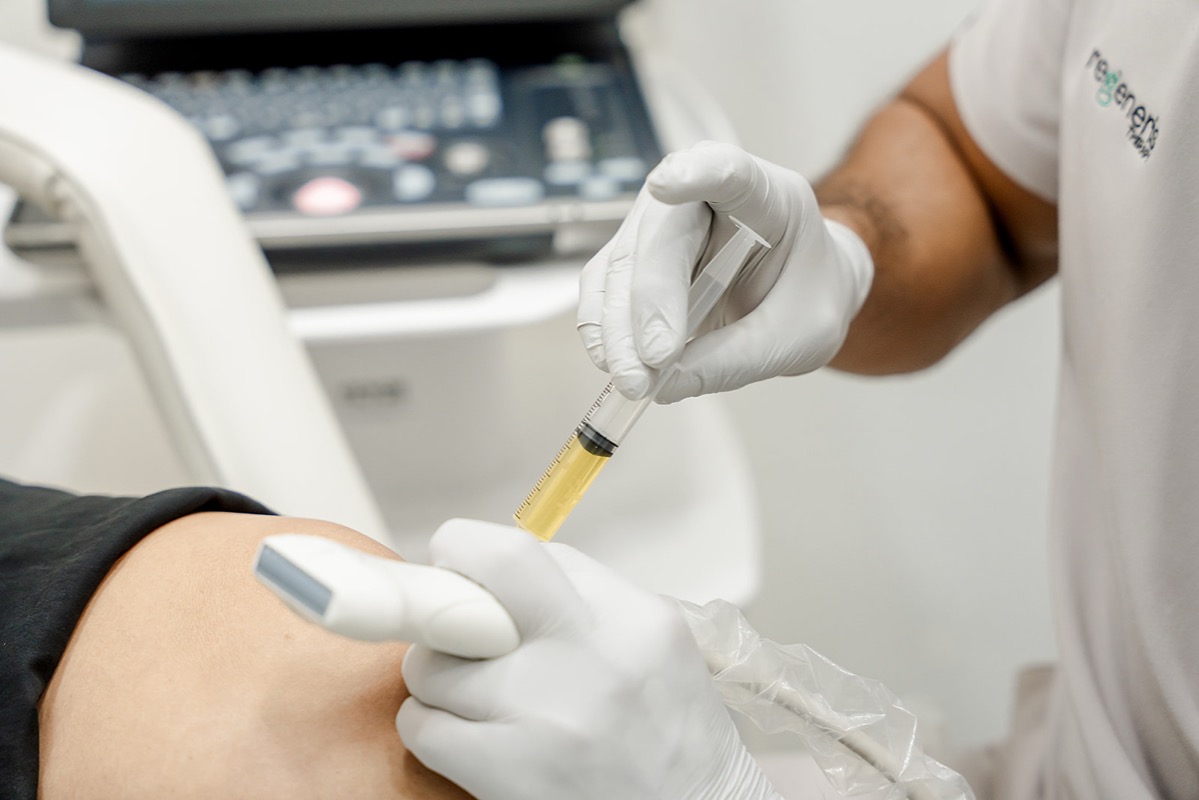
We use four primary routes depending on the indication. Intravenous (IV) infusion for systemic anti-inflammatory, autoimmune, and longevity applications — the exosomes distribute through circulation and target inflamed or stressed tissues across the body. Intra-articular injection for orthopedic indications like knee osteoarthritis and tendinopathy, often in combination with PRP or stem cells. Intranasal delivery for neurological and cognitive indications — small exosomes can cross the nasal mucosa and reach the brain through the olfactory pathway, an option we consider for cognitive-aging and post-viral neuro-fog (see Long COVID). And topical application for skin and hair, where the exosome cargo signals fibroblasts to produce more collagen and follicle cells to enter the growth phase. Each route has different evidence quality and we explain which applies to your case.
Sources and quality: UC-MSC-derived, characterized batches
Not all exosomes are created equal. The exosome industry has had quality and labeling problems globally, with products marketed as exosomes that on independent testing contain very few intact exosomes — and others that have been contaminated. We mitigate this by sourcing only from Mexican laboratories licensed under COFEPRIS and by requiring batch characterization: particle counts by nanoparticle tracking analysis (target ≥5×10^10 particles per dose), positive tetraspanin markers (CD9, CD63, CD81) confirming exosome identity, sterility, and endotoxin testing. We do not use 'exosome-like' products of unclear origin and we do not use exosomes from sources that cannot document their characterization. If a clinic cannot answer 'how many particles, from what source, with what markers' — that is a red flag. Read more in our stem cell sources comparison.
Conditions where exosomes shine
Exosomes have particular strengths in four clinical areas. Neurological and cognitive indications because of their ability to cross or bypass the blood-brain barrier — applications include post-viral brain fog, age-related cognitive decline, and as an adjunct in multiple sclerosis. Anti-aging and longevity protocols, where exosomes are used as a maintenance signal between annual stem-cell infusions or as a standalone intervention for patients who are not candidates for cell therapy. Skin rejuvenation, both injected and topical, where exosomes consistently outperform PRP for tone, texture, and pore appearance in published comparative studies. And hair restoration, where exosome scalp protocols (often combined with microneedling) extend the anagen growth phase. We do not market exosomes for every condition; we use them where the evidence and mechanism align.
What to expect during treatment
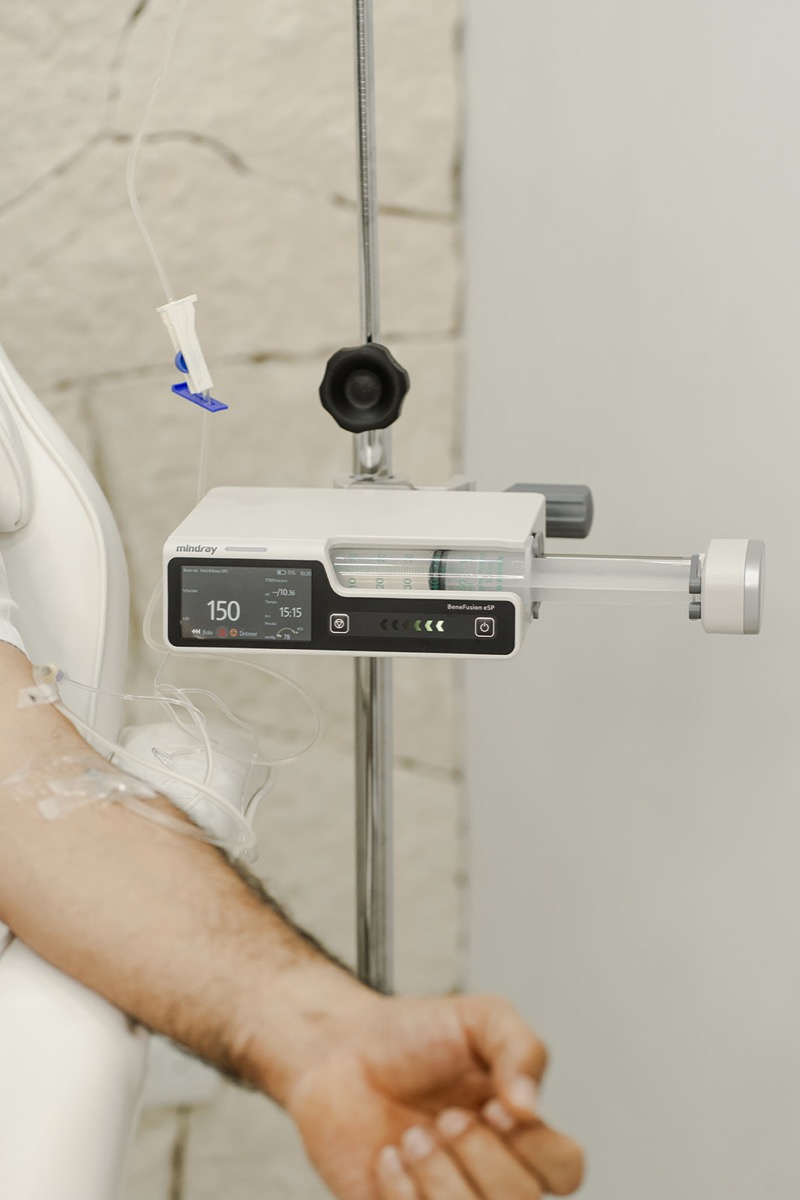
An exosome IV infusion takes 45–60 minutes and you can return to normal activity the same day. Intra-articular injections take about 15 minutes including local anesthesia. Topical and intranasal applications are even shorter. Side effects are typically mild — a brief warm flush during IV infusion, transient soreness at injection sites, or a mild headache for 24 hours are the most common. Allergic reactions are rare because there are no whole cells or protein antigens that the immune system would mount a sustained response against. We schedule follow-up at 7 days and 30 days, with longer-term outcome reviews at 3 months. Most patients begin noticing effects in the first 2–4 weeks, with peak benefit in the 6–12 week window. Boost infusions may be appropriate every 3–6 months depending on the indication.
If you are weighing exosomes against stem cells, talk to our team — we will give you an honest opinion about which is appropriate for your case.